

Treating polycythemia vera
The primary aim of polycythemia vera (PV) management is to maintain HCT below the 45% threshold
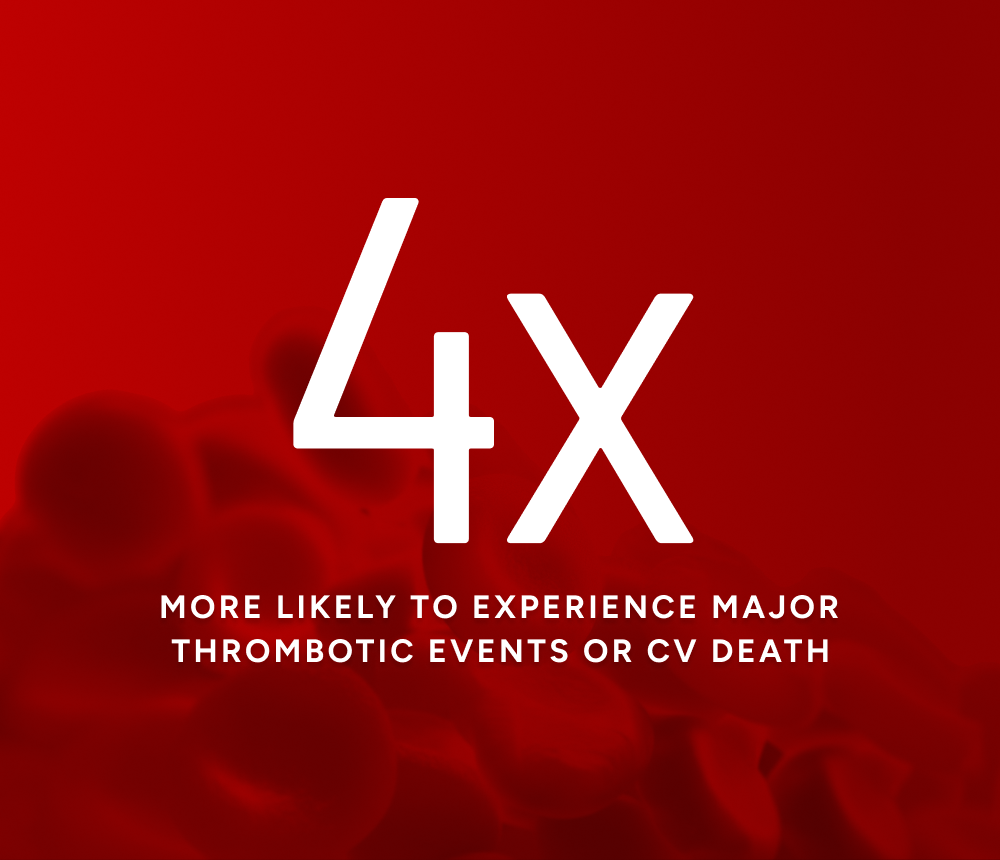
Even slight increases in HCT can increase TE risk
People with PV who consistently maintained HCT levels ≥45%, specifically within 45%-50%, were 4x more likely to experience major thrombotic events or CV death compared to those whose HCT was tightly controlled below the 45% threshold.3*
*In an Italian RCT study (CYTO-PV) of 365 PV patients being treated with phlebotomy, hydroxyurea, or both, 2.7% (n=5/182) with HCT <45% died from CV causes or had major thrombotic events vs 9.8% (n=18/183) with HCT 45%-50% after a median follow-up of 31 months (HR, 3.91; 95% CI, 1.45-10.53; P=0.007).3
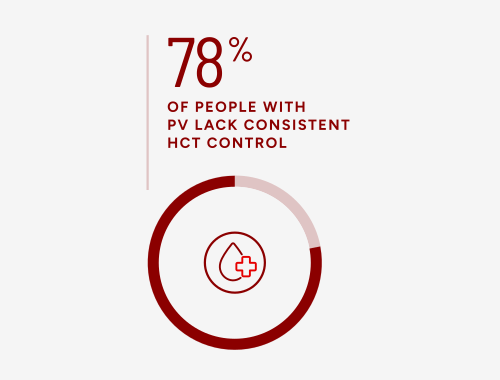
78% of people with PV lack consistent HCT control (N=4,264)1,2
A retrospective analysis of 28,306 PV patients found that only 14% of low-risk and 25% of high-risk patients consistently maintained HCT below the 45% threshold, despite treatment with phlebotomy with or without cytoreductive therapy.1†

Managing symptoms and minimizing overall disease burden are important given the chronic nature of the disease, with patients living a median of ~12 years after diagnosis, and more than 35 years after diagnosis for patients ≤40 years of age.10,14

In an observational study, worsening symptoms affected 47% (n=133/285) of PV patients, of which the majority‡ were actively treated.4§

Approximately 60% (n=23/38) of people with PV show laboratory evidence of iron depletion, including low serum iron, TSAT, and ferritin.5

Even when HCT is controlled, iron deficiency may increase symptom burden in people with PV.3,5,6
†There are certain limitations of this study that are consistent with the retrospective nature of claims-based analyses and include the potential for incomplete or missing records and misdiagnosis of PV, as diagnoses were based solely on database records. There is also the possibility that thrombotic events were misdiagnosed, underdiagnosed, or otherwise, incorrectly reported.1
‡227 (79%) and 217 (76%) patients were actively receiving cytoreductive and antiplatelet therapy, respectively.4
§A multicenter, retrospective, observational study comprising patients from 13 academic and community centers. Eligibility criteria were patients >18 years old, enrolled with a diagnosis of PV, ET or MF (primary or post-PV/ET) according to WHO and/or International Consensus criteria, and having completed at least one MPN-SAF TSS questionnaire between April 2013 and August 2022.4
Common treatments for PV include:
Therapeutic phlebotomy and low-dose aspirin
Therapeutic phlebotomy and low-dose aspirin
Therapeutic phlebotomy, used in combination with low-dose aspirin per ELN recommendations13,29,30
- Aspirin is used to reduce the risk of thrombosis14,31
- Aspirin belongs to the class of NSAIDs, and can help reduce thrombotic risk and alleviate microvascular symptoms by preventing platelet aggregation31
- Therapeutic phlebotomy—in patients under 60 years of age with no prior thrombosis (low-risk PV), therapeutic phlebotomy is typically initiated as a treatment for temporary HCT reduction14,32,33
- This treatment removes blood cells from the body, reducing blood viscosity and causing iron deficiency to limit red blood cell production34
- Therapeutic phlebotomy is reactive and is often unpredictable, which may cause stress and anxiety8
- People with PV require ~8 therapeutic phlebotomies per year, with each procedure lasting up to 4 hours8,9
- Logistical challenges, such as finding a treatment site and frequency of clinic or hospital visits, interfere with daily life and productivity8,9
- In addition to lowering total blood volume, a therapeutic phlebotomy induces temporary iron deficiency to curtail erythropoiesis35
- Therapeutic phlebotomy exacerbates iron deficiency and PV symptom burden8
- Iron deficiency persists or worsens with ongoing therapeutic phlebotomies—especially as erythrocytosis continues6,36
- People receiving therapeutic phlebotomy tend to report more severe symptoms, including fatigue, which creates quality of life burdens32
- 85.8% reported distress due to the procedure9∥
- Patients may also become intolerant, and it may be difficult to gain access to the appropriate vein37
Cytoreductive therapy (CRT)
Cytoreductive therapy (CRT)
CRT (e.g., hydroxyurea, interferons therapy, and JAK inhibitors) is recommended to reduce HCT for patients ≥60 years old, those with prior thrombosis, intolerance to phlebotomy, progressive splenomegaly, or persistent symptoms despite first-line care14
- Hydroxyurea is an antimetabolite chemotherapy that interferes with cellular DNA synthesis and causes cell death38
- It offers limited efficacy with significant side effects39
- It is associated with resistance and intolerance, which occurs in 24% of patients40
- JAK inhibitors work by downregulating JAK signal transduction and activation of transcription pathways to inhibit myeloproliferation41
- Interferons work upstream of JAK mutations in the bone marrow42
- They also require ~8 months to take effect, so patients may require close monitoring during this time43
- All currently approved CRTs are associated with high rates of discontinuation due to adverse events, which occur in up to 37% of patients41,44,45
‖Based on a prospective, observational study of 2,510 PV patients receiving phlebotomy who were evaluated using a phlebotomy burden questionnaire.9
Symptoms can impact the quality of life of people with PV

Among newly diagnosed MPN patients, people with PV report quality of life deficits.46¶
Assessing mental and emotional well-being as a routine practice helps physicians understand each patient’s comprehensive experience of PV.8
¶The primary aim of the study was to investigate and compare the QoL at diagnosis in patients diagnosed with MPNs (ET [N=80], PV [N=73], primary MF [N=22], and MPN undifferentiated [N=4]), using EORTC QLQ-C30 and MPN-SAF. The EORTC QLQ-C30 is a cancer-specific questionnaire with 30 items that is composed of five functional scales, three symptom scales, a global QoL scale, and six single items, and the MPN-SAF is composed of 27 items.46

66% of people with PV, even those with low calculated prognostic risk score, report that their symptoms reduced their quality of life (N=380).22

Asking your patients open-ended questions is an essential strategy to better understand how PV, and its treatment, truly impacts their day-to-day life.23

Phrases like “I’m tired,” “I’m off,” or “I’m not me,” are clues to disease burden that labs won’t catch.22,23
CI=confidence interval; CRT=cytoreductive therapy; CV=cardiovascular; CYTO-PV=cytoreductive therapy in polycythemia vera; ELN=European LeukemiaNet; EORTC QLQ-C30=European Organization for Research and Treatment of Cancer Quality of Life Questionnaire–Core 30; ET=essential thrombocythemia; HCT=hematocrit; HR=hazard ratio; JAK=Janus kinase; MF=myelofibrosis; MPN=myeloproliferative neoplasm; MPN-SAF=Myeloproliferative Neoplasm Symptom Assessment Form; NSAID=non-steroidal anti-inflammatory drug; PV=polycythemia vera; QoL=quality of life; RCT=randomized controlled trial; TE=thromboembolic event; TSAT=transferrin saturation; TSS=total symptom score; WHO=World Health Organization.
References
1. Verstovsek S, Pemmaraju N, Reaven NL, et al. Real-world treatments and thrombotic events in polycythemia vera patients in the USA. Ann Hematol. 2023;102(3):571-581. doi:10.1007/s00277-023-05089-6. 2. Verstovsek S, Pemmaraju N, Reaven NL, et al. Real-world treatments and thrombotic events in polycythemia vera patients in the USA. Electronic Supplemental Material. Ann Hematol. 2023;102(3):571-581. doi:10.1007/s00277-023-05089-6. 3. Marchioli R, Finazzi G, Specchia G, et al. Cardiovascular events and intensity of treatment in polycythemia vera. N Engl J Med. 2013;368(1):22-33. doi:10.1056/NEJMoa1208500. 4. Poullet A, Busque L, Sirhan S, et al. Symptom burden in myeloproliferative neoplasms: clinical correlates, dynamics, and survival impact—a study of 784 patients from the Quebec MPN research group. Blood Cancer J. 2025;15(1):51. doi:10.1038/s41408-025-01234-8.
5. Randrianarisoa RMF, Ramanandafy H, Mania A, et al. Prevalence and diagnostic performance of iron deficiency in polycythemia. Hematology. 2023;28(1):2204621. doi:10.1080/16078454.2023.2204621. 6. Ginzburg YZ, Feola M, Zimran E, et al. Dysregulated iron metabolism in polycythemia vera: etiology and consequences. Leukemia. 2018;32(10):2105-2116. doi:10.1038/s41375-018-0207-9. 7. Vainchenker W, Kralovics R. Genetic basis and molecular pathophysiology of classical myeloproliferative neoplasms. Blood. 2017;129(6):667-679. doi:10.1182/blood-2016-10-695940. 8. Kuykendall AT, Fine JT, Kremyanskaya M. Contemporary challenges in polycythemia vera management from the perspective of patients and physicians. Clin Lymphoma Myeloma Leuk. 2024;24(8):512-522. doi:10.1016/j.clml.2024.04.003. 9. Data on file. Takeda Pharmaceuticals U.S.A., Inc. 10. Tefferi A, Barbui T. Polycythemia vera: 2024 update on diagnosis, risk-stratification, and management. Am J Hematol. 2023;98(9):1465-1487. doi:10.1002/ajh.27002. 11. Zhao ZJ, Vainchenker W, Krantz SB et al. Role of tyrosine kinases and phosphatases in polycythemia vera. Semin Hematol. 2005;42(4):221-229. doi:10.1053/j.seminhematol.2005.05.019. 12. Ling B, Xu Y, Qian S, et al. Regulation of hematopoietic stem cells differentiation, self-renewal, and quiescence through the mTOR signaling pathway. Front Cell Dev Biol. 2023;11:1186850. doi:10.3389/fcell.2023.1186850. 13. Waggoner M. Polycythemia vera: thinking beyond the hematocrit. J Adv Pract Oncol. 2023;14(5):405-413. doi:10.6004/jadpro.2023.14.5.5. 14. Griesshammer M, Kiladjian JJ, Besses C. Thromboembolic events in polycythemia vera. Ann Hematol. 2019;98(5):1071-1082. doi:10.1007/s00277-019-03625-x. 15. MPN Research Foundation. Polycythemia vera (PV). Updated 2026. Accessed June, 2026. Available at: https://mpnresearchfoundation.org/polycythemia-vera-pv/. 16. Lichtman MA, Kaushansky K, Prchal JT, Levi MM, Burns LJ, Linch DC, eds. Polycythemia vera. In: Williams Manual of Hematology. 10th ed. McGraw Hill; 2022:248-253. 17. Blood Cancer United. Myeloproliferative neoplasms: in detail. Revised 2025. Accessed June, 2026. Available at: https://bloodcancerunited.org/. 18. National Organization for Rare Disorders (NORD). Polycythemia vera. Revised March, 2026. Accessed June, 2026. Available at: https://rarediseases.org/rare-diseases/polycythemia-vera/. 19. Cuthbert D, Stein BL. Polycythemia vera-associated complications: pathogenesis, clinical manifestations, and effects on outcomes. J Blood Med. 2019;10:359-371. doi:10.2147/JBM.S189922. 20. Brabrand M, Frederiksen H. Risks of solid and lymphoid malignancies in patients with myeloproliferative neoplasms: clinical implications. Cancers. 2020;12(10):3061. doi:10.3390/cancers12103061. 21. Landtblom AR, Bower H, Andersson TML, et al. Second malignancies in patients with myeloproliferative neoplasms: a population-based cohort study of 9,379 patients. Leukemia. 2018;32(10):2203-2210. doi:10.1038/s41375-018-0027-y. 22. Mesa R, Miller CB, Thyne M, et al. Myeloproliferative neoplasms (MPNs) have a significant impact on patients' overall health and productivity: the MPN Landmark survey. BMC Cancer. 2016;16:167. doi:10.1186/s12885-016-2208-2. 23. Mesa RA, Miller CB, Thyne M, et al. Differences in treatment goals and perception of symptom burden between patients with myeloproliferative neoplasms (MPNs) and hematologists/oncologists in the United States: findings from the MPN Landmark survey. Cancer. 2017;123(3):449-458. doi:10.1002/cncr.30325. 24. National Cancer Institute. Coping with cancer: emotions and cancer. Updated April, 2025. Accessed June, 2026. Available at: https://www.cancer.gov/about-cancer/coping/feelings. 25. Bradford A, Young K, Whitechurch A, et al. Disabled, invisible and dismissed—the lived experience of fatigue in people with myeloproliferative neoplasms. Cancer Rep (Hoboken). 2023;6(1):e1655. doi:10.1002/cnr2.1655. 26. Verstovsek S, Harrison CN, Kiladjian JJ, et al. Markers of iron deficiency in patients with polycythemia vera receiving ruxolitinib or best available therapy. Leuk Res. 2017;56:52-59. doi:10.1016/j.leukres.2017.01.032. 27. Mesa RA, Schwager S, Radia D, et al. The Myelofibrosis Symptom Assessment Form (MFSAF): an evidence-based brief inventory to measure quality of life and symptomatic response to treatment in myelofibrosis. Leuk Res. 2009;33(9):1199-1203. doi:10.1016/j.leukres.2009.01.035. 28. Grunwald MR, Burke JM, Kuter DJ, et al. Symptom burden and blood counts in patients with polycythemia vera in the United States: an analysis from the REVEAL study. Clin Lymphoma Myeloma Leuk. 2019;19(9):579-584.e1. doi:10.1016/j.clml.2019.06.001. 29. Barbui T. Appropriate management of polycythemia vera with cytoreductive drug therapy: European LeukemiaNet 2021 recommendations. Hematol Transfus Cell Ther. 2022;44(1):S3-S4. doi:10.1016/j.htct.2022.09.1190. 30. Landolfi R, Marchioli R, Kutti J, et al. Efficacy and safety of low-dose aspirin in polycythemia vera. N Engl J Med. 2004;350(2):114-124. doi:10.1056/NEJMoa035572. 31. Tefferi A, Vannucchi AM, Barbui T. Polycythemia vera: historical oversights, diagnostic details, and therapeutic views. Leukemia. 2021;35(12):3339-3351. doi:10.1038/s41375-021-01401-3.
32. Visweshwar N, Fletcher B, Jaglal M, et al. Impact of phlebotomy on quality of life in low-risk polycythemia vera. J Clin Med. 2024;13(16):4952. doi:10.3390/jcm13164952. 33. Silver RT, Abu-Zeinah G. Polycythemia vera: aspects of its current diagnosis and initial treatment. Expert Rev Hematol. 2023;16(4):253-266. doi:10.1080/17474086.2023.2198698. 34. Kim KH, Oh KY. Clinical applications of therapeutic phlebotomy. J Blood Med. 2016;7:139-144. doi:10.2147/JBM.S108479. 35. Edahiro Y, Komatsu N. Iron deficiency and phlebotomy in patients with polycythemia vera. Int J Hematol. 2025;121(1):39-44. doi:10.1007/s12185-024-03868-z. 36. Bennett C, Jackson VE, Pettikiriarachchi A, et al. Iron homeostasis governs erythroid phenotype in polycythemia vera. Blood. 2023;141(26):3199-3214. doi:10.1182/blood.2022016779. 37. Assi TB, Baz E. Current applications of therapeutic phlebotomy. Blood Transfus. 2014;12 (Suppl 1):s75-83. doi:10.2450/2013.0299-12. 38. Mayo Clinic. Hydroxyurea (oral route). Updated March, 2026. Accessed June, 2026. Available at: https://www.mayoclinic.org/drugs-supplements/hydroxyurea-oral-route/description/drg-20068109. 39. Parasuraman S, DiBonaventura M, Reith K, et al. Patterns of hydroxyurea use and clinical outcomes among patients with polycythemia vera in real-world clinical practice: a chart review. Exp Hematol Oncol. 2016;5:3. doi:10.1186/s40164-016-0031-8. 40. Alvarez-Larrán A, Pereira A, Cervantes F, et al. Assessment and prognostic value of the European LeukemiaNet criteria for clinicohematologic response, resistance, and intolerance to hydroxyurea in polycythemia vera. Blood. 2012;119(6):1363-1369. doi:10.1182/blood-2011-10-387787. 41. Jakafi (ruxolitinib). Package insert. Incyte Corporation; 2023. 42. BESREMi (ropeginterferon alfa-2b-njft). Package insert. PharmaEssentiaⓇ USA Corporation; 2024. 43. Vachhani P, Mascarenhas J, Bose P, et al. Interferons in the treatment of myeloproliferative neoplasms. Ther Adv Hematol. 2024;15:1-22. doi:10.1177/20406207241229588. 44. Tremblay D, Ronner L, Podoltsev N, et al. Ruxolitinib discontinuation in polycythemia vera: patient characteristics, outcomes, and salvage strategies from a large multi-institutional database. Leuk Res. 2021;109:106629. doi:10.1016/j.leukres.2021.106629. 45. Chamseddine RS, Savenkov O, Rana S. Cytoreductive therapy in younger adults with polycythemia vera: a meta-analysis of safety and outcomes. Blood Adv. 2024;8(10):2520-2526. doi:10.1182/bloodadvances.2023012459. 46. Abelsson J, Andréasson B, Samuelsson J, et al. Patients with polycythemia vera have worst impairment of quality of life among patients with newly diagnosed myeloproliferative neoplasms. Leuk Lymphoma. 2013;54(10):2226-2230. doi:10.3109/10428194.2013.766732. 47. American Cancer Society. Adjusting to life with cancer. Updated December, 2025. Accessed June, 2026. Available at: https://www.cancer.org/cancer/coping/adjusting-to-life-with-cancer.html. 48. Ponce RKM, Verma K, Gergen-Barnett K, et al. A review of medical mistrust across the cancer continuum of care and current interventions. J Community Health. 2025;50(4):750-760. doi:10.1007/s10900-025-01462-w. 49. Poullet A, Busque L, Sirhan S, et al. Symptom burden in myeloproliferative neoplasms: clinical correlates, dynamics, and survival impact—a study of 784 patients from the Quebec MPN Research Group. Supplemental Figure 1. Blood Cancer J. 2025;15:51. doi:10.1038/s41408-025-01234-8. 50. Handa S, Ginzburg Y, Hoffman R, et al. Hepcidin mimetics in polycythemia vera: resolving the irony of iron deficiency and erythrocytosis. Curr Opin Hematol. 2023;30(2):45-52. doi:10.1097/MOH.0000000000000747. 51. McFarland DC, Shaffer KM, Polizzi H, et al. Associations of physical and psychologic symptom burden in patients with Philadelphia chromosome-negative myeloproliferative neoplasms. Psychosomatics. 2018;59(5):472-480. doi:10.1016/j.psym.2018.01.006. 52. Yu J, Parasuraman S, Paranagama D, et al. Impact of myeloproliferative neoplasms on patients' employment status and work productivity in the United States: results from the living with MPNs survey. BMC Cancer. 2018;18:420. doi:10.1186/s12885-018-4322-9. 53. National Institutes of Health (NIH). Talking to your doctor. Updated March, 2025. Accessed June, 2026. Available at: https://www.nih.gov/institutes-nih/nih-office-director/office-communications-public-liaison/clear-communication/talking-your-doctor-or-health-care-provider. 54. Harrison CN, Ross DM, Fogliatto LM, et al. Patient and physician perceptions regarding treatment expectations and symptomatology in polycythemia vera: insights from the Landmark 2.0 global health survey. Hemasphere. 2025;9(3):e70106. doi:10.1002/hem3.70106. 55. Manz K, Heidel FH, Koschmieder S, et al. Comparison of recognition of symptom burden in MPN between patient- and physician-reported assessment—an intraindividual analysis by the German Study Group for MPN (GSG-MPN). Leukemia. 2025;39(4):864-875. doi:10.1038/s41375-025-02524-7. 56. Emanuel RM, Dueck AC, Geyer HL, et al. Myeloproliferative neoplasm (MPN) symptom assessment form total symptom score: prospective international assessment of an abbreviated symptom burden scoring system among patients with MPNs. J Clin Oncol. 2012;30(33):4098-103. doi:10.1200/JCO.2012.42.3863. 57. Almeida LR, Faustino D, Gameiro R, et al. Masked polycythemia vera and iron deficiency in a fertile-age woman. Cureus. 2023;15(1):e33545. doi:10.7759/cureus.33545. 58. Saad HKM, Abd Rahman AA, Ab Ghani AS, et al. Activation of STAT and SMAD signaling induces hepcidin re-expression as a therapeutic target for β-thalassemia patients. Biomedicines. 2022;10(1):189. doi:10.3390/biomedicines10010189. 59. Pilo F, Angelucci E. Vamifeport: monography of the first oral ferroportin inhibitor. J Clin Med. 2024;13(18):5524. doi:10.3390/jcm13185524. 60. Ganz T. Hepcidin—a regulator of intestinal iron absorption and iron recycling by macrophages. Best Pract Res Clin Haematol. 2005;18(2):171-182. doi:10.1016/j.beha.2004.08.020. 61. Cleveland Clinic. Iron-deficiency anemia. Revised December, 2024. Accessed June, 2026. Available at: https://my.clevelandclinic.org/health/diseases/22824-iron-deficiency-anemia. 62. Faruqi A, Zubair M, Mukkamalla SKR. Iron-binding capacity. In: StatPearls. Treasure Island (FL): StatPearls Publishing; May 2, 2024.